Stroma lies in the Pentland Firth, barely two miles from the Caithness coast, yet separated from the Scottish mainland by some of the most powerful tidal waters in Europe. For centuries this small island supported a community sustained by farming, fishing and its relationship with the sea. Its population declined throughout the twentieth century until the last permanent islanders departed in 1962.
Today Stroma is often described as an abandoned island, but that description is too simple. The remains of crofts, the church, lighthouse, telephone box and domestic interiors speak of the community that once lived here, while boats and agricultural machinery record the work that sustained it. At the same time, Stroma has never entirely ceased to be a working landscape. The island continues to be farmed, and buildings such as the former Nurse's House still provide shelter and basic facilities for those working there.
These twelve photographs form a public selection from a much larger body of work. Rather than documenting abandonment alone, Stroma explores what remains when a community disappears but its physical presence persists. Buildings, possessions and infrastructure become traces of individual lives; ordinary objects acquire a significance they would never have possessed while still in everyday use.
Throughout the project I have used light selectively, allowing subjects to emerge from deep shadow rather than attempting to describe the island objectively. The darkness is not intended to suggest that Stroma itself is a bleak place, but to isolate and give weight to the evidence of human activity that drew me to it.
Ultimately, however, the human story exists within something larger. Stroma is an island shaped by sea, geology and weather long before people settled upon it and which will continue to change long after their structures have disappeared. The photographs move between landscape and human intervention, presence and absence, past and present: a study not simply of an abandoned community, but of the marks people leave upon a place.
Stroma is an ongoing photographic project which I am currently developing.
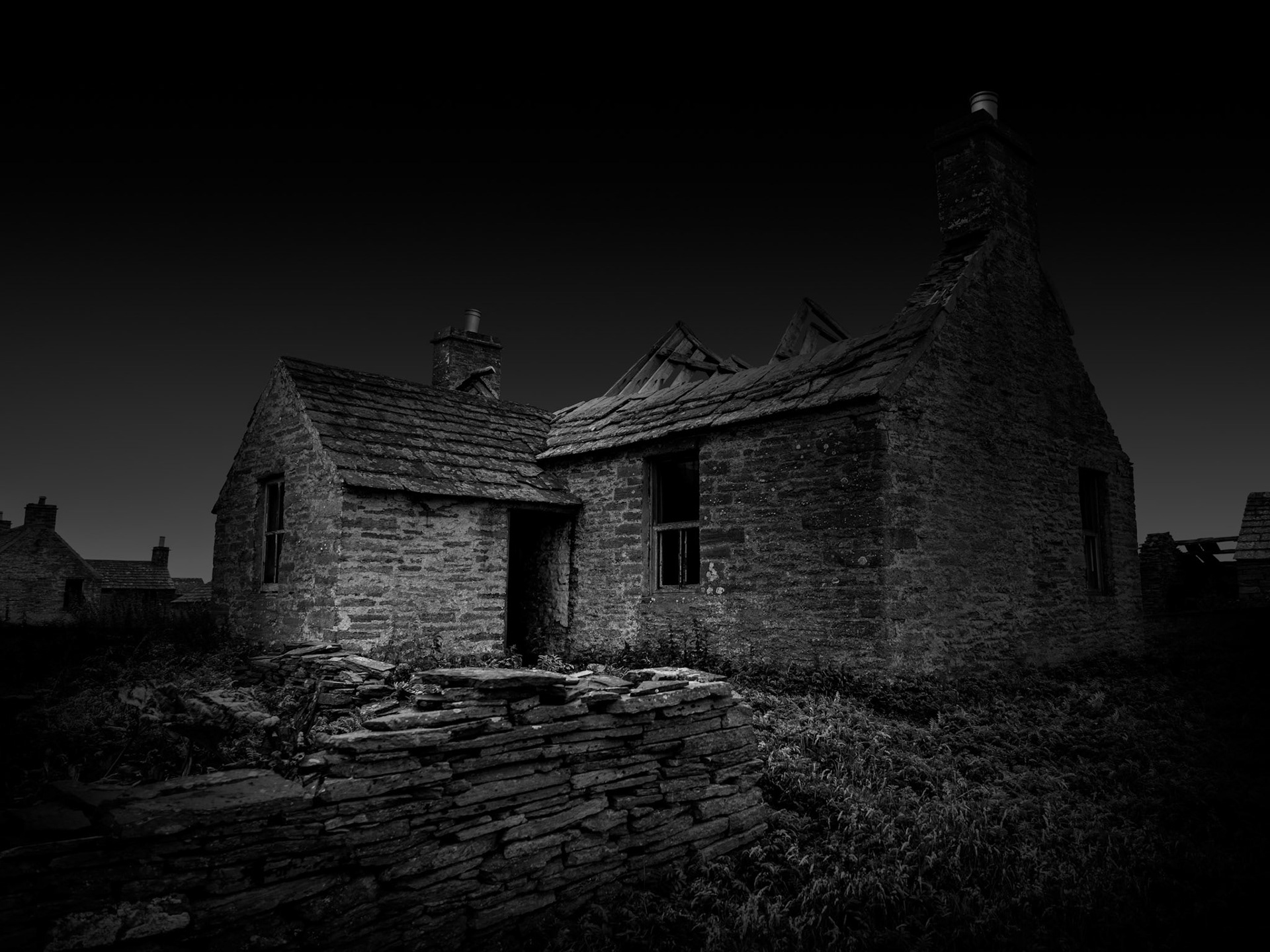
For generations, Stroma supported a small but resilient community whose lives were shaped by farming, fishing and the surrounding waters of the Pentland Firth. Today the remains of many of its crofts stand roofless and exposed, their stone walls gradually being reclaimed by the landscape. The last permanent islanders left Stroma in 1962, bringing centuries of continuous settlement to an end. This photograph concentrates on the physical traces they left behind, using controlled light to separate the ruined buildings from the surrounding darkness. Rather than treating the croft simply as a picturesque ruin, I wanted it to retain a sense of solidity and presence: something constructed through human effort that continues to occupy the landscape long after its purpose has disappeared.Stroma is an ongoing photographic project which I am currently developing.
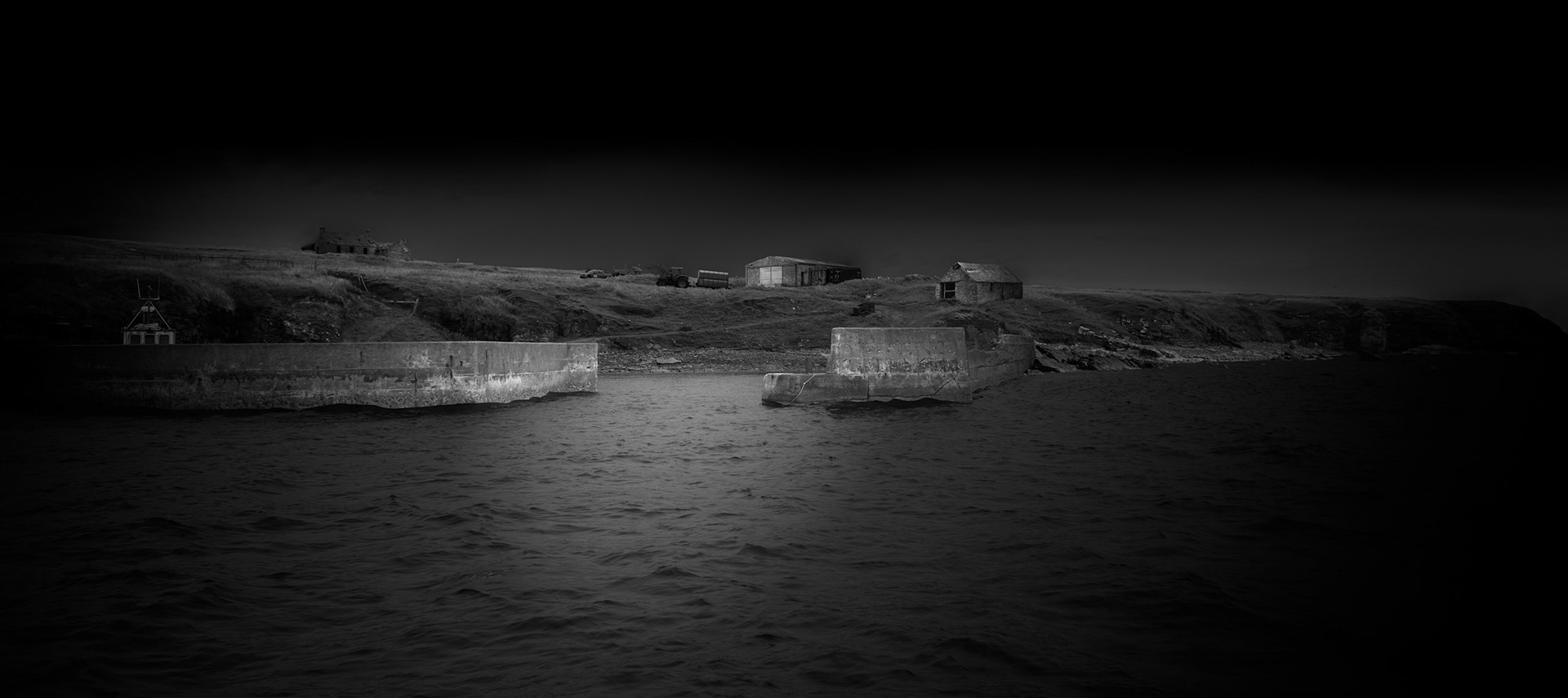
Stroma lies barely two miles from the Caithness coast and can appear tantalisingly accessible from the mainland. Between the two, however, flows the Pentland Firth, whose powerful tidal streams have always defined the island's relationship with the outside world. Approaching Stroma by boat reveals the island gradually: its low profile rising from the water before the harbour, buildings and remnants of settlement become apparent. This photograph deliberately places the island within that surrounding expanse of sea. It acts as an introduction to a place that is geographically close yet historically isolated, and to a landscape where the remains of human occupation can still be discerned against the much larger forces of water, weather and time.Stroma is an ongoing photographic project which I am currently developing.
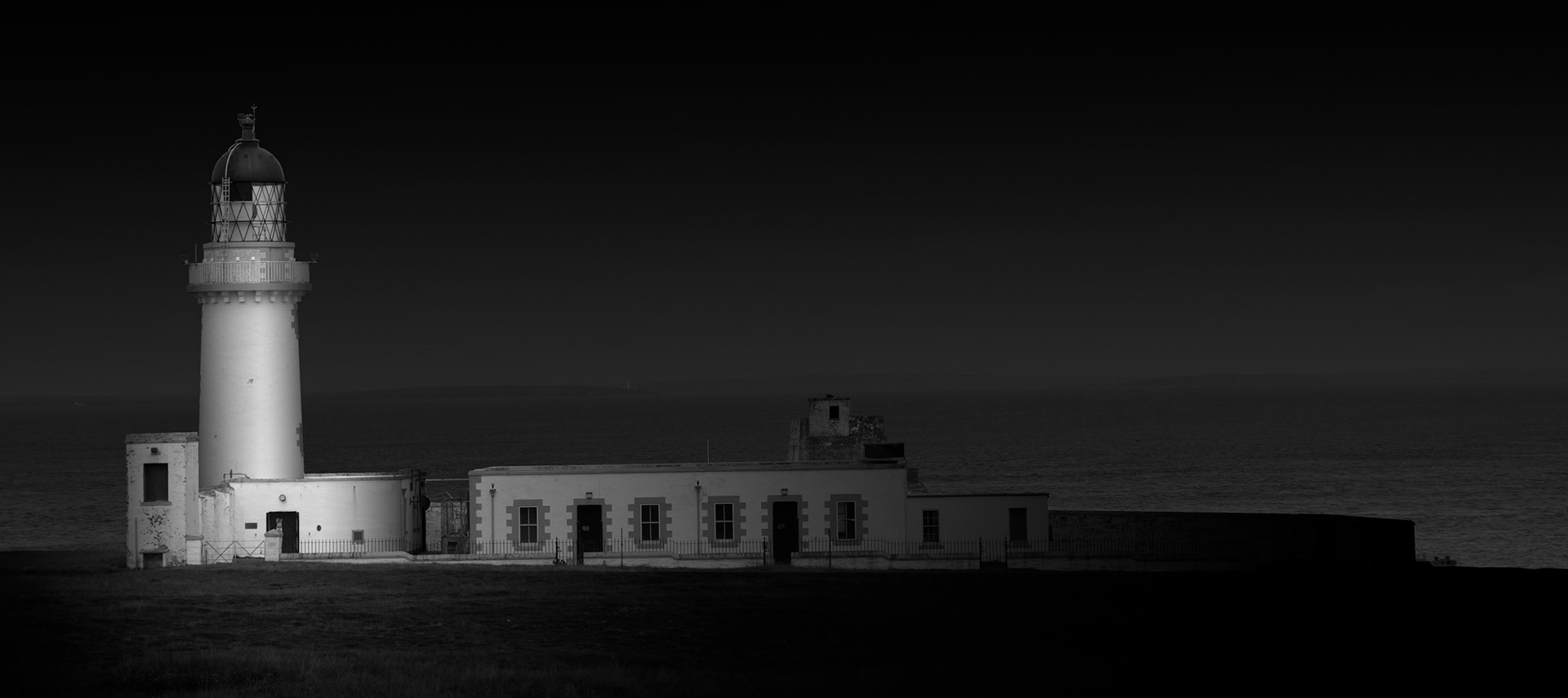
Standing at Silkie Point on Stroma's northern coast, the lighthouse is one of the island's most prominent surviving structures. Built in 1896 (by David A & Charles Stevenson) to safeguard vessels navigating the notoriously difficult waters of the Pentland Firth, it represents another aspect of Stroma's long relationship with the sea. Unlike the island's abandoned crofts, the lighthouse continued to have an active human presence long after the permanent population had departed, remaining manned until its automation in the late 1990s. I have photographed it almost as a pool of illumination within the surrounding darkness, allowing the white tower and associated buildings to emerge from the landscape. Its ordered geometry contrasts with the ruined domestic structures elsewhere on Stroma and provides a reminder that the island's history did not simply end when its community left.Stroma is an ongoing photographic project which I am currently developing.
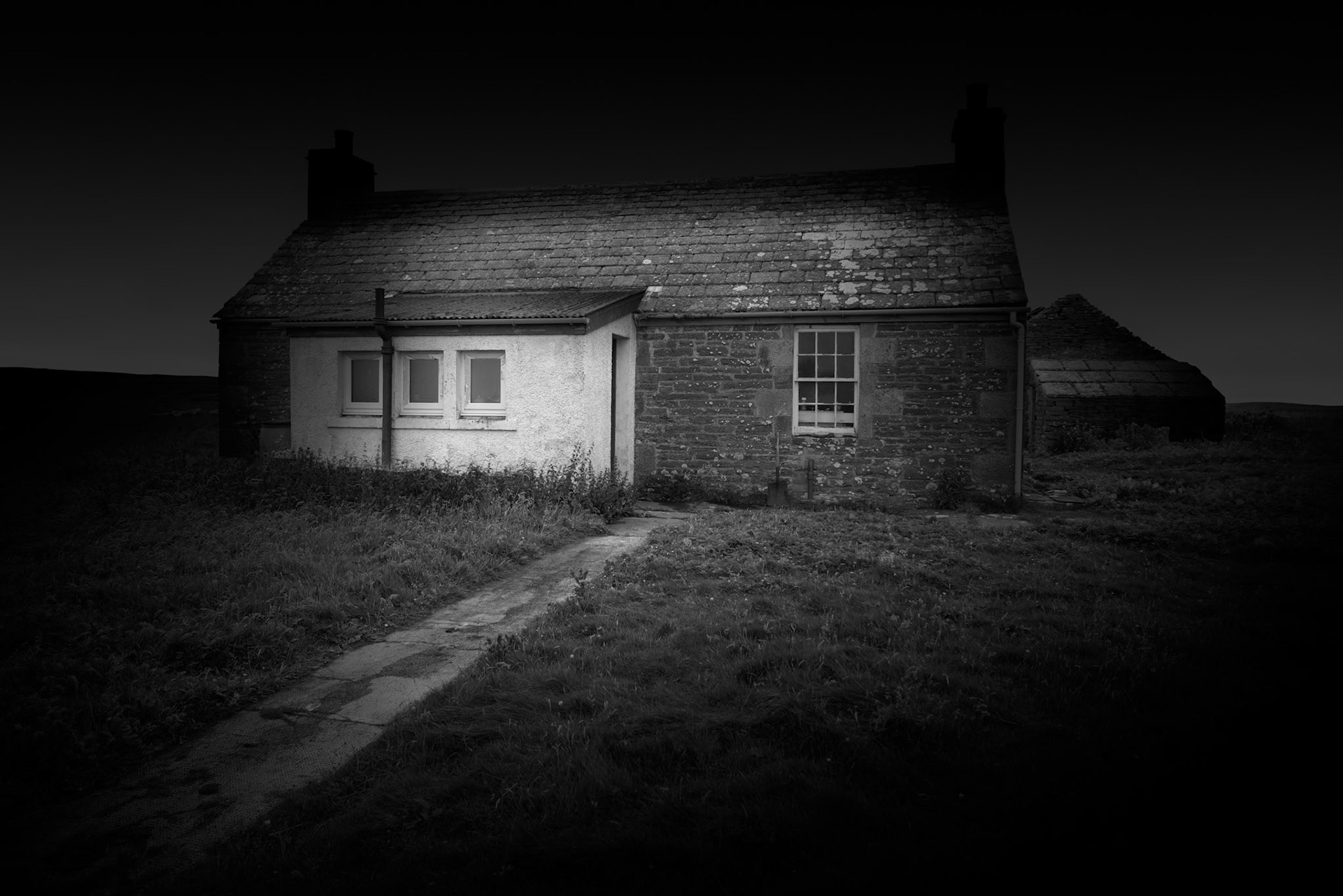
The Nurse's House is one of the most intact domestic buildings remaining on Stroma and provides an important counterpoint to the island's many roofless crofts. Its survival also complicates the idea of Stroma as simply an abandoned island. Although there is no longer a permanent community, the island continues to be farmed, and the house is used by farm workers when they need shelter, retaining basic facilities including a functioning flushing toilet. The worn path leading towards the building was important to me when making this photograph. It gives the house a connection to the surrounding landscape and suggests continued movement and use. Stroma may have lost its permanent population, but human activity has never entirely disappeared.Stroma is an ongoing photographic project which I am currently developing.
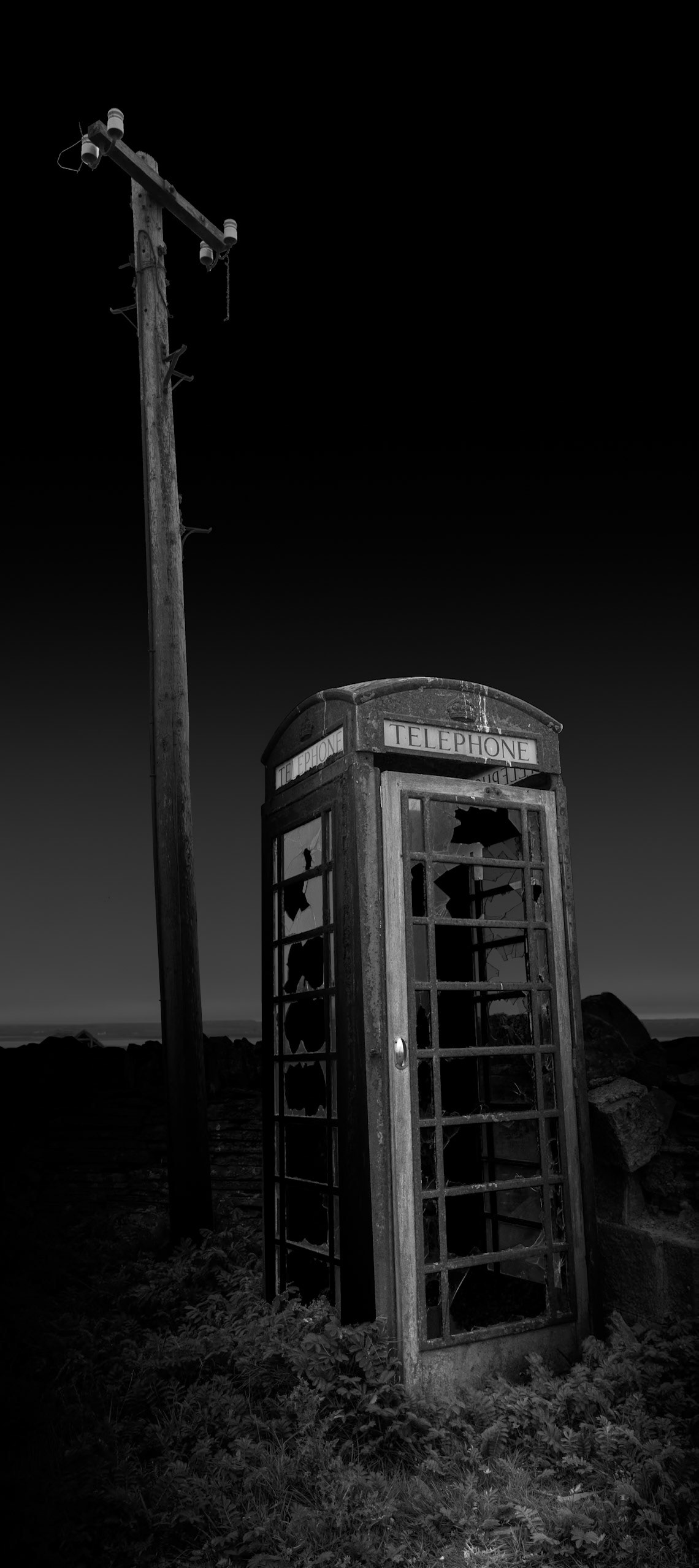
Standing alone beneath its telegraph pole, Stroma's telephone box is an unexpectedly familiar object in an extraordinary setting. It once formed part of the infrastructure connecting the island's small community with the mainland, a reminder that Stroma was not always the deserted place encountered today. Telephone boxes are among the most commonplace pieces of British street furniture, but here its isolation gives it a very different significance. I deliberately photographed it without much surrounding context, allowing the structure and pole to emerge from darkness almost as an archaeological object. For me it represents one of the central ideas behind this project: ordinary things acquire an unexpected emotional weight when the community for which they were provided has disappeared.Stroma is an ongoing photographic project which I am currently developing.
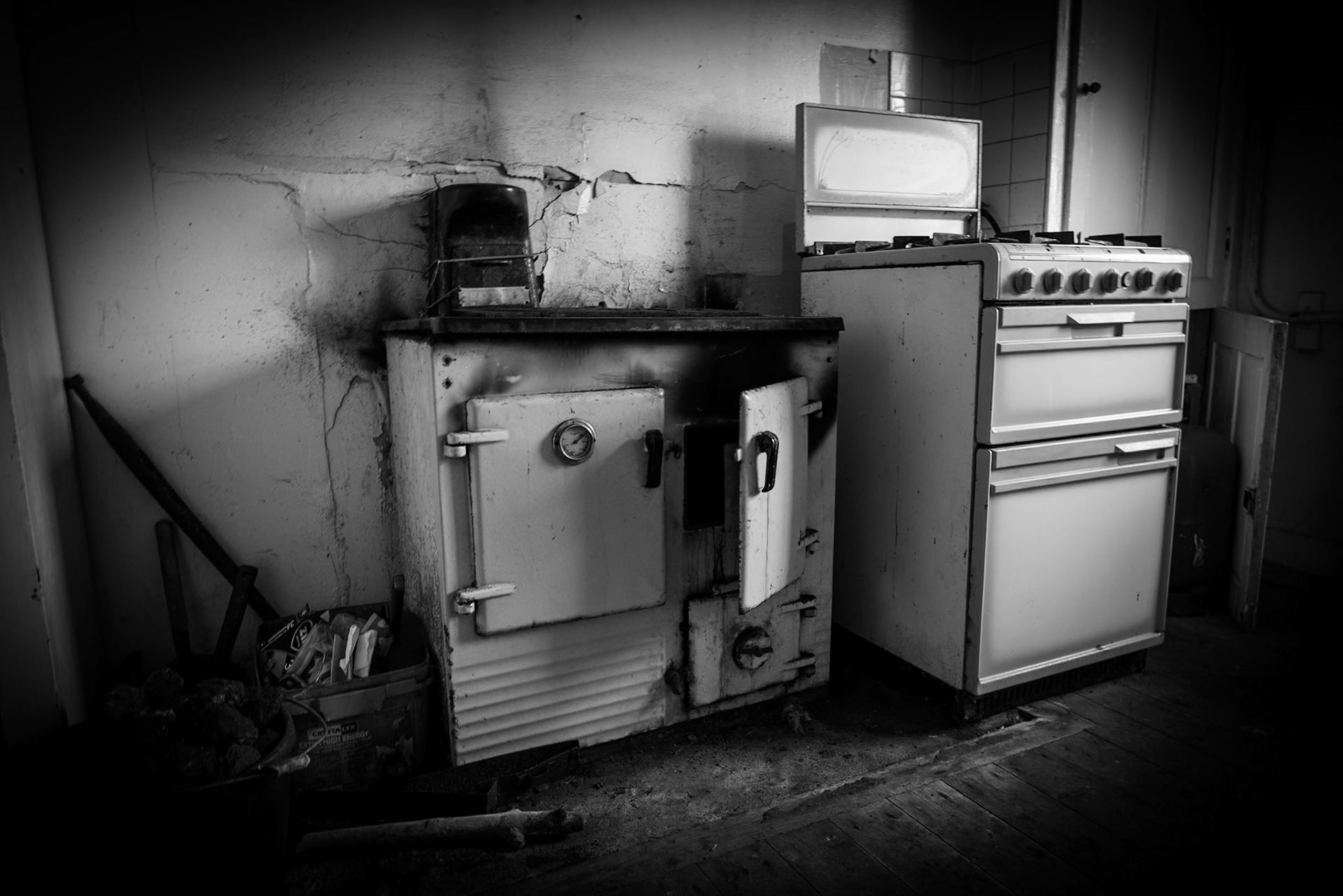
The kitchen of the Nurse's House offers a rare opportunity to step inside Stroma's domestic history. The range, cooker and other surviving fittings make this much more immediately human than an empty stone shell: these are objects associated with warmth, food and everyday routine. Yet the house is not simply frozen evidence of an abandoned community. It remains available to the farm workers who continue to work on Stroma, giving the building a modest but genuine contemporary purpose. I wanted the photograph to preserve that ambiguity. Light falls across the appliances while much of the room remains in shadow, revealing enough to recognise an ordinary kitchen while allowing the darkness and deterioration around it to speak of the very different life the building has experienced.Stroma is an ongoing photographic project which I am currently developing.
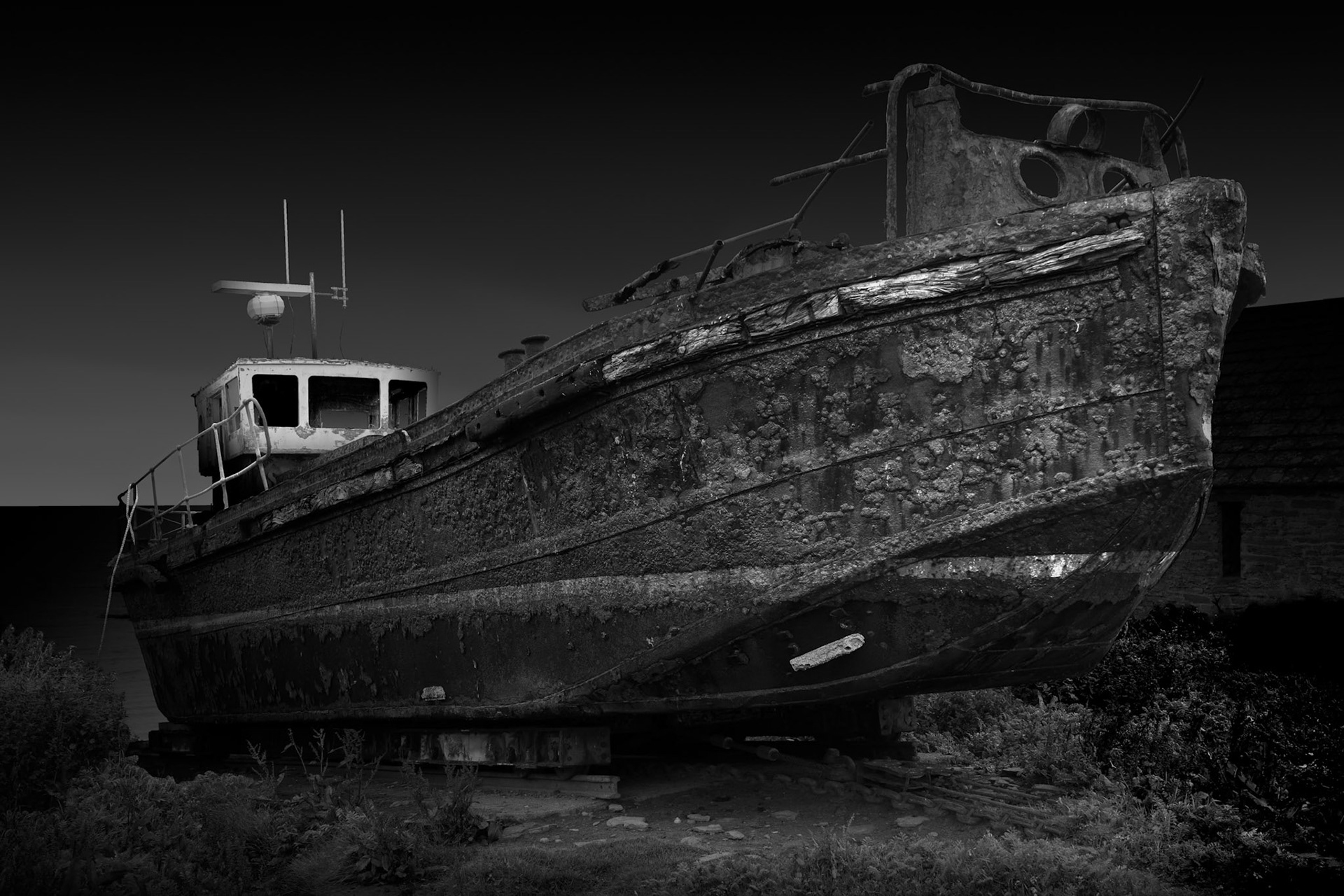
Boats were once fundamental to life on Stroma. The Pentland Firth provided both opportunity and danger, connecting the islanders with fishing and the mainland while simultaneously creating one of the greatest obstacles to permanent settlement. This abandoned vessel now rests out of the water, its working life apparently finished but its form still strikingly intact. I was interested in photographing it less as maritime nostalgia than as another piece of redundant human infrastructure. By isolating the hull against the darker surroundings, its scars, textures and substantial physical presence become prominent. Like the crofts and agricultural equipment elsewhere on the island, it survives as evidence of work: an object made and maintained for a practical purpose that has outlasted the circumstances which once made it necessary.Stroma is an ongoing photographic project which I am currently developing.
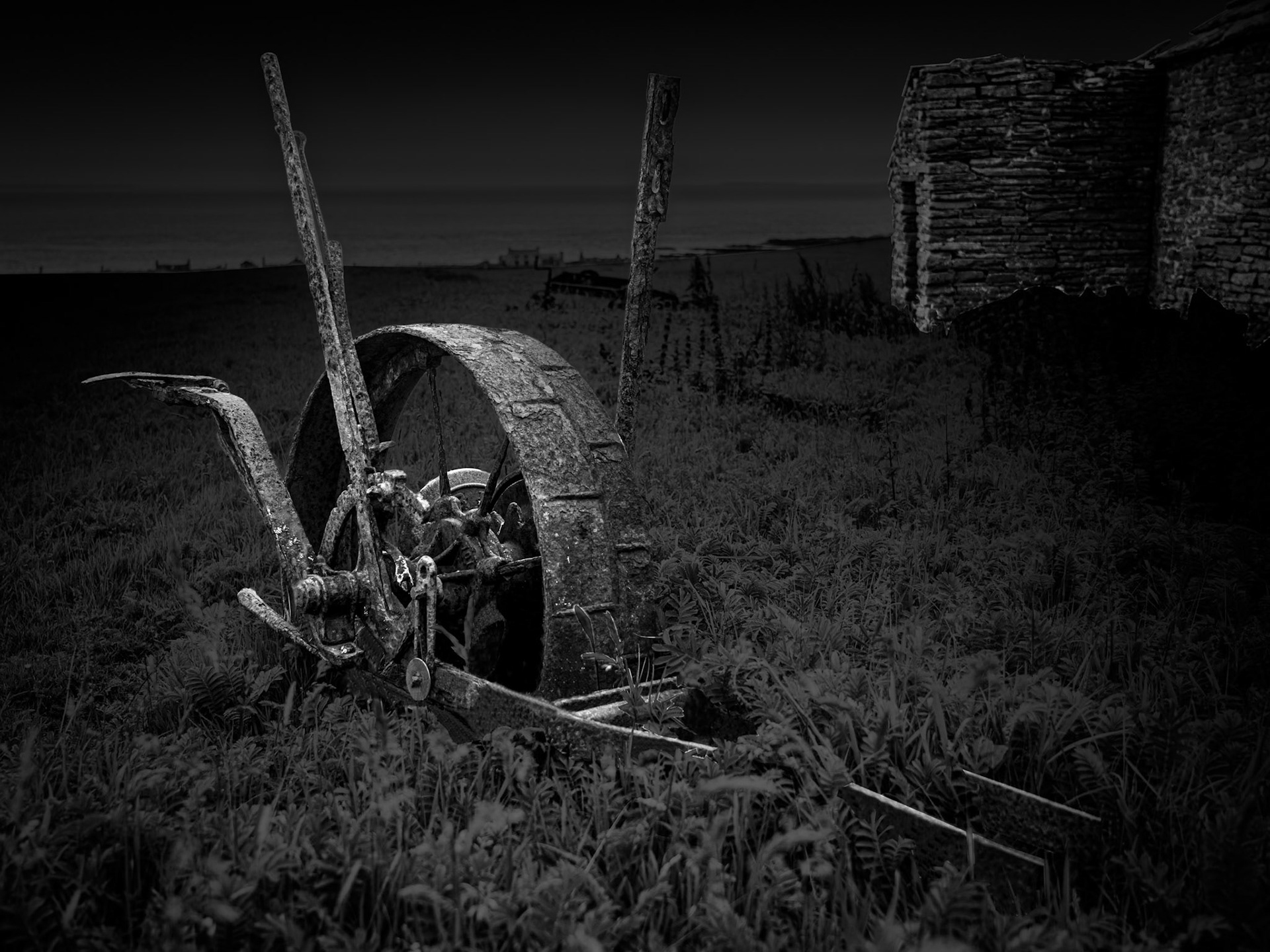
Agriculture has shaped Stroma's landscape for generations and, unlike the permanent settlement, farming has not entirely disappeared from the island. Scattered among the crofts are older pieces of agricultural machinery whose working lives have ended, gradually deteriorating where they were left. I am fascinated by these objects because they provide a direct physical connection with labour. The twisted metal, wheels and mechanisms speak of people working this land rather than simply inhabiting it. In this photograph I have used light selectively to draw the machinery from the surrounding vegetation while retaining the darkness of the wider landscape. It becomes almost sculptural, but its decay remains visible: another layer in Stroma's accumulation of human traces, existing alongside the continuing agricultural use of the island.Stroma is an ongoing photographic project which I am currently developing.
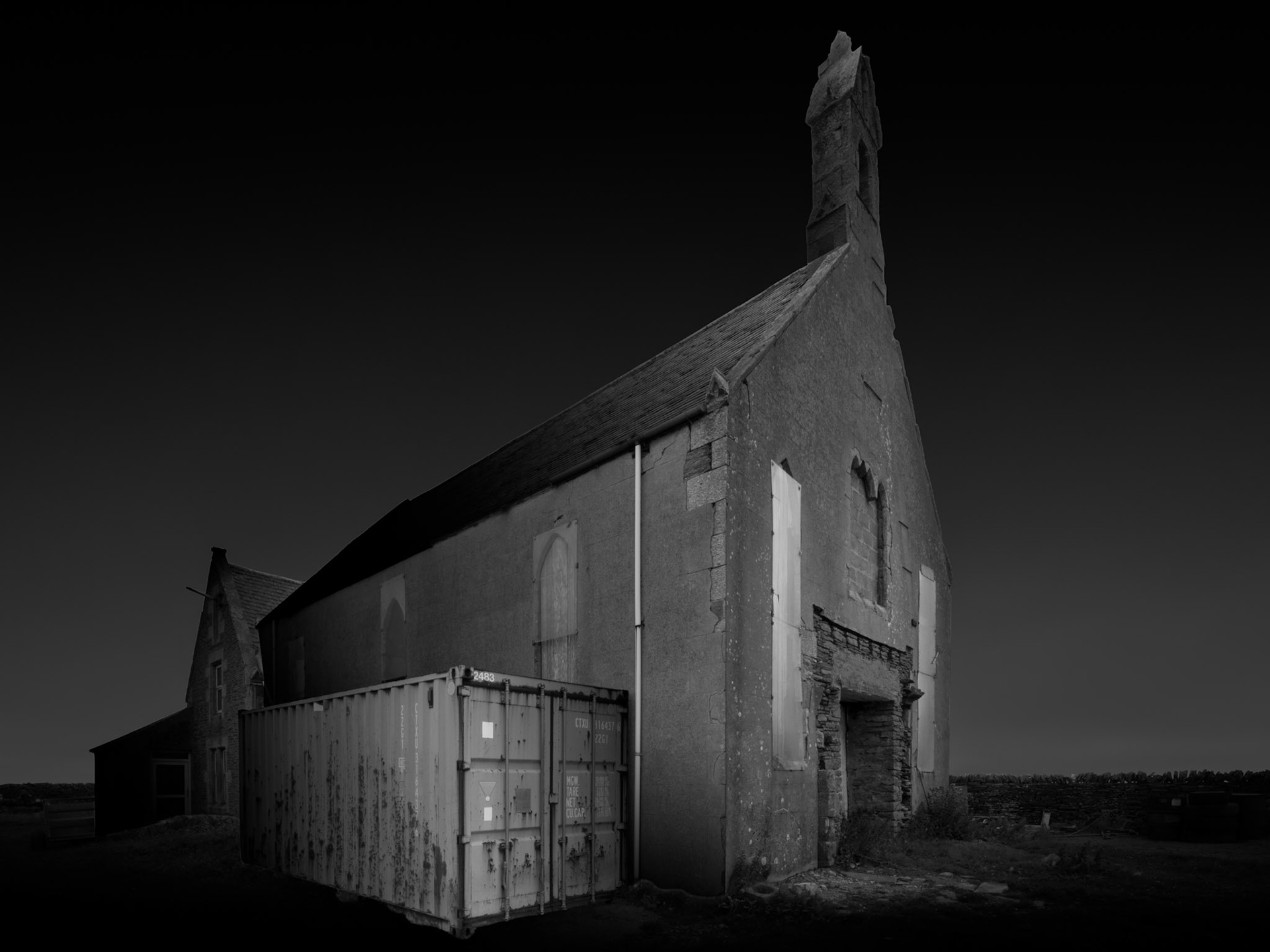
The church was once at the heart of Stroma's community, serving a population scattered among the island's crofts. Its scale and distinctive architecture give some indication of a settlement that was considerably more substantial than the handful of surviving intact buildings might now suggest. As Stroma's population declined, the institutions that supported communal life inevitably declined with it, and the church eventually closed. I wanted to photograph the building with a monumentality that reflects its former significance rather than treating it simply as another abandoned structure. Its gable and long walls rise dramatically against the dark sky, while the modern container alongside it introduces a deliberately awkward reminder that contemporary agricultural activity continues around these remnants of the former community.Stroma is an ongoing photographic project which I am currently developing.
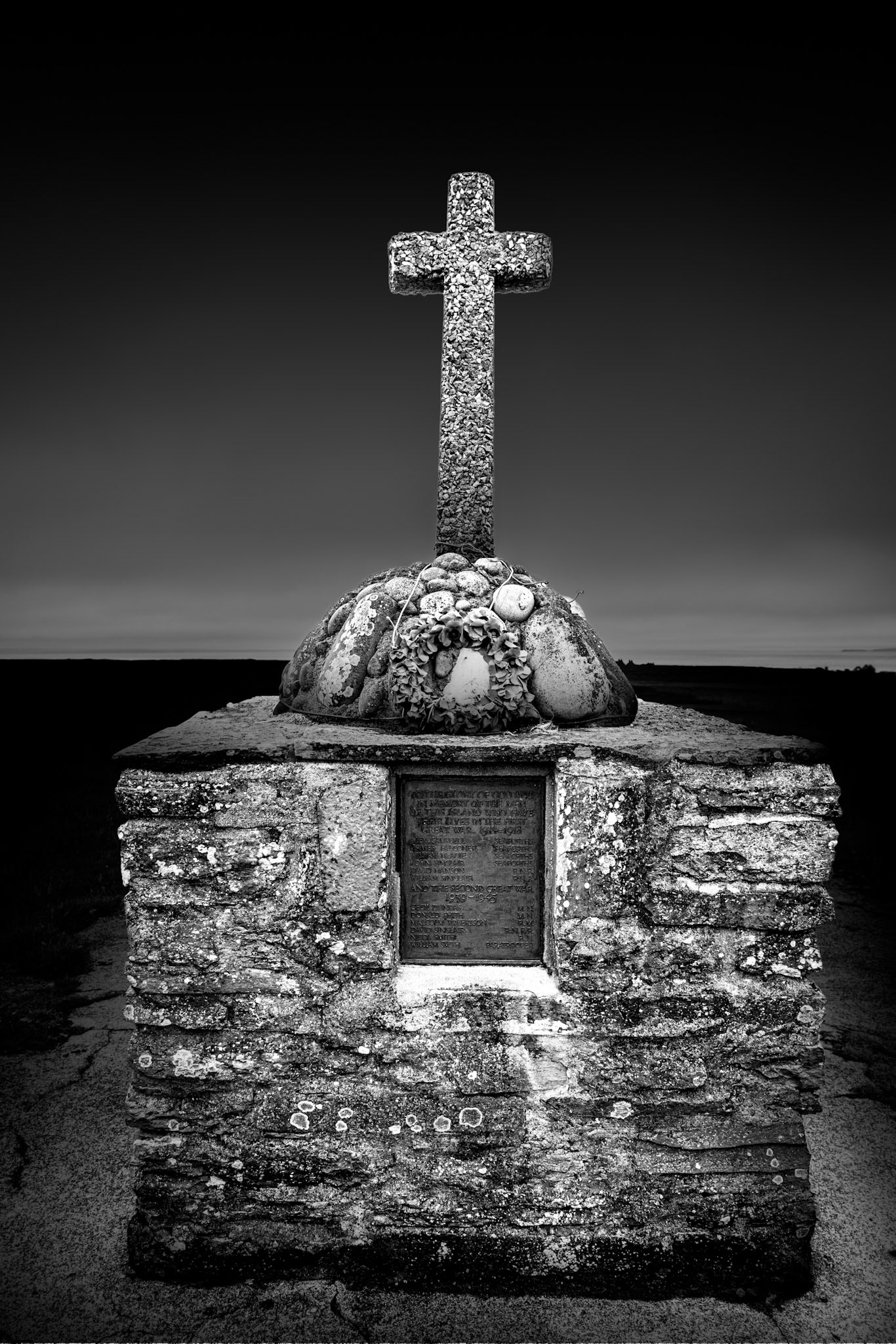
Stroma's war memorial carries perhaps the most explicit reminder that the island's ruins represent individual lives rather than an abstract story of depopulation. The memorial records islanders lost to war and remains cared for despite the disappearance of Stroma's permanent community. When the church closed, the memorial plaque needed a new home and was incorporated into this purpose-built structure; the Simpson family continue to ensure that a wreath is placed here. I photographed the memorial frontally and with very little surrounding distraction, allowing the cross and stonework to emerge against the darkness. Among the abandoned buildings and machinery of Stroma, this is different: a human trace deliberately maintained because remembering the people who once belonged here still matters.Stroma is an ongoing photographic project which I am currently developing.
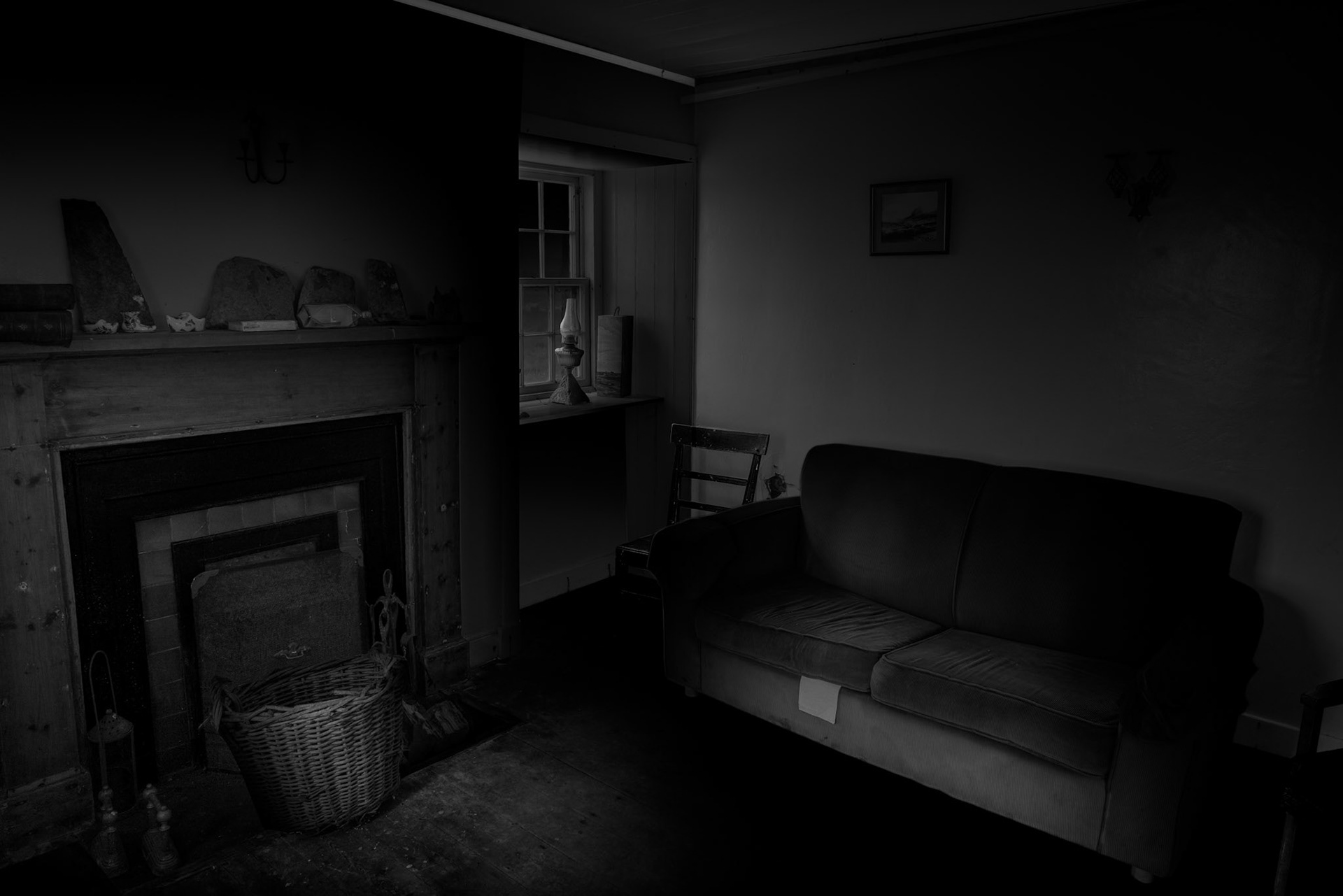
Of all Stroma's surviving spaces, domestic rooms perhaps make the disappearance of its community most tangible. A fireplace, armchair, sofa and objects on the mantelpiece transform this from an architectural interior into somewhere recognisably associated with everyday life. Yet the Nurse's House has not been completely abandoned. It provides shelter for the farm workers who continue to use the island, so its interiors occupy an unusual position between past and present. I deliberately allowed much of the room to disappear into shadow, drawing attention instead to these familiar objects and the traces of light entering through the window. The result is less about dereliction than absence: an ordinary room in a place where the ordinary patterns of permanent domestic life have disappeared.Stroma is an ongoing photographic project which I am currently developing.